Are rents capped in Saint-Étienne?
No. Saint-Étienne is not among the territories that apply rent control, reserved for a list of towns published by Service Public. You set the rent freely at the first letting. In a non-tight market, a rent that is too high is paid for in weeks of vacancy: rely on the rent map and on listings in the neighbourhood to stay within the market.
Do you need a rental permit in Saint-Étienne?
No, not at present. Neither the City nor Saint-Étienne Métropole has introduced a rental authorisation or declaration scheme: no resolution to that effect appears in their registers, up to the municipal council of 21 September 2026. In the Loire, the CAF mentions Roanne, Riorges and Boën-sur-Lignon. A local authority can create this scheme at any time: before signing a lease, ask the City’s housing department whether the address is affected.
Is Saint-Étienne a good city for a student studio?
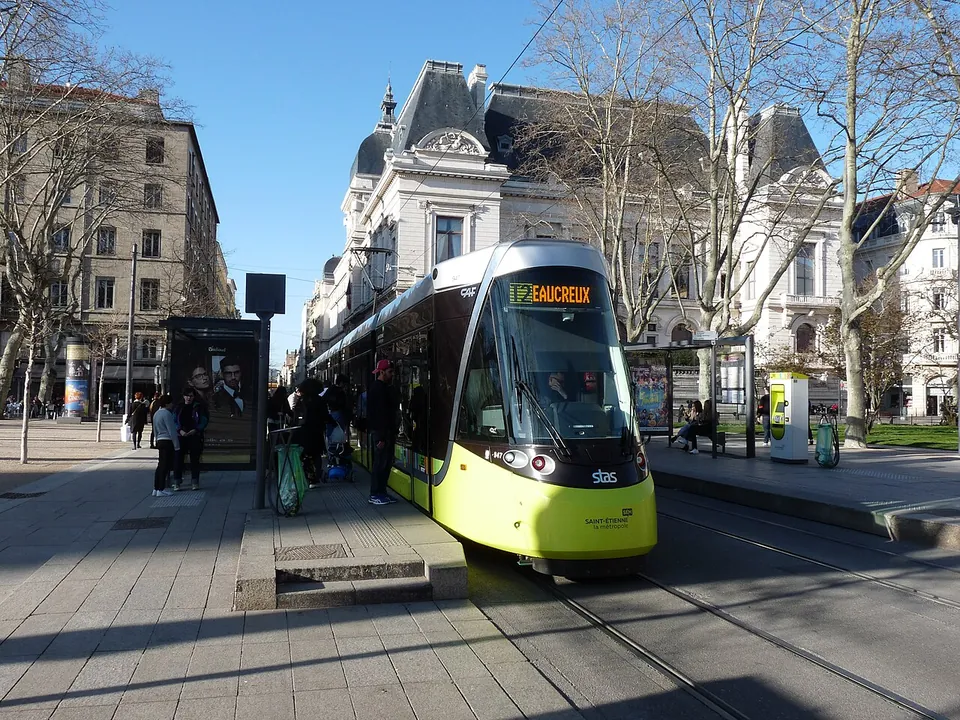
Demand exists: Saint-Étienne is a university city, and small units find tenants there. The market is not tight for all that. A studio works if it is renovated, carefully furnished and close to a campus or the tram. A remote or dated home will struggle to let.
What budget should you plan for a small flat in Saint-Étienne?
With a median price of €1,219 per m² in the DVF statistics (last 10 half-years), a 35 m² apartment represents about €42,700 before fees. Add acquisition costs (transfer duties and notary fees, which Service Public details), furnishing if you let furnished, and a works budget if the energy performance certificate (DPE) is poor. Prices vary from one street to the next: look at actual sales in the DVF database.
How do you view a property in Saint-Étienne while living abroad?
The simplest route is often via Lyon. Direct trains link Saint-Étienne to Lyon. A viewing within the day remains possible from a flight to Lyon. For the next steps, a power of attorney at the notary lets you sign the purchase without travelling, and a local agency can handle day-to-day management.
Is an empty home taxed in Saint-Étienne?
Yes. Saint-Étienne already taxes homes left empty for more than two years: 4,336 homes were subject to the tax on vacant homes in 2025, according to the DGFiP. On 21 September 2026, the municipal council introduced the new vacancy tax on residential premises, at a rate of 23.18% of the rental value from 2027, for a home that has been vacant for at least two years on 1 January. A home occupied for more than 90 days in the year, or offered for let at the market price without finding a tenant, is excluded: keep a record of your listings.
Does Saint-Étienne have remarkable heritage sites?
Yes, five: Centre Nord and Couriot - Manufacture (2016), Centre Sud (2024), Crêt de Roc and Tarentaize - Beaubrun (2004). Works on the exterior parts of buildings there require the approval of the architecte des Bâtiments de France.
Do the former mines pose a risk in Saint-Étienne?
In part of the city, yes. A mining risk prevention plan has applied since February 2018, for risks of localised collapse, subsidence, landslide or heating. Before buying, read the risk statement attached to the preliminary sales agreement and consult the plan at the town hall.
Can you benefit from the Denormandie scheme in Saint-Étienne while living abroad?
No. Saint-Étienne is neither in Action cœur de ville nor in a territorial revitalisation operation, and the tax reduction is in any case reserved for taxpayers domiciled in France at the time of purchase.
What budget should you plan for investing in Saint-Étienne?
According to sales recorded in DVF from January 2025 to December 2025, a studio sold for a median price of €43,000, a two-room apartment for a median price of €58,500 and a large home for a median price of €100,000. Allow about 8% notary fees on top for older properties, and a works budget if the energy rating is poor.
What is the property tax (taxe foncière) in Saint-Étienne?
In 2026, the municipal property tax rate is 44.68%, plus 2.60% for the intermunicipality. These rates apply to half the cadastral rental value of the home: ask the seller for their latest property tax notice to know the amount.
How much does a property in Saint-Étienne earn after tax when you live abroad?
For a 40 m² furnished two-room apartment bought for €48,760 and let for €456 a month, about 9.7% of the price remains after tax if you are covered by a scheme in the European Union, the EEA, Switzerland or the United Kingdom without depending on a mandatory French scheme, and 9.1% otherwise, under the micro-BIC regime and at the minimum rate of 20%. Charges, property tax and purchase costs are not deducted.
What happens if I sell my property while living abroad?
The capital gain is taxed in France at 19%, plus social contributions, and the notary withholds this tax at the time of sale, with an exemption from tax after 22 years and from social contributions after 30 years of ownership.


 Lives in Switzerland