Is Orléans a tight-market zone?
Yes. Orléans is in a high-pressure housing area (zone tendue), together with 18 other municipalities of the Métropole, in the list resulting from the decree of 22 December 2025 and in that of the decree of 25 August 2026, which will apply from 2027. For you as a landlord, this has three effects: on re-letting, the rent of a new tenant is in principle limited to the last rent; the tenant of an unfurnished home can leave with one month’s notice; a home that has been empty for at least one year is taxed. This tax does not wait for 2027: Orléans is already within the scope of the tax on vacant homes, which will be replaced in 2027 by the vacancy tax on residential premises, applicable automatically.
Are rents capped in Orléans?
Not in the sense of the stricter rent control of Paris, Lyon or Bordeaux, which sets a reference rent: Orléans is not on the Service Public list, checked on 1 November 2026. You can set the rent freely when the home is first let. On re-letting, for a lease signed between 1 August 2026 and 31 July 2027, the new rent can in principle not exceed the old one if the home has been empty for less than 18 months, except for major works or a manifestly underestimated rent. For a home rated F or G, no increase is possible, without exception.
What type of property to choose for letting to students?
Aim for a furnished studio or two-room apartment close to tram line A, which links the Aubrais station, Orléans station, the centre and Saint-Marceau to the La Source campus. The rent map gives an advertised rent of €14.8 per m² including charges for one- and two-room homes. In the Carmes, where the Métropole expects more than 3,000 students in 2028 with the law, economics and management faculty, check that the building is not subject to a compulsory building restoration operation. A home rated G can no longer be let under a new lease, and a home rated F will no longer be from 2028.
Is an empty home in Orléans taxed?
Yes. Orléans is in a high-pressure housing area and already subject to the annual tax on vacant homes: 17% of the cadastral rental value in the first year, then 34%, for a home that has been empty for at least one year on 1 January. In 2027, the vacancy tax on residential premises replaces it and applies automatically in Orléans, which is listed in the decree of 25 August 2026, at the same rates; the municipality can raise them to 30% then 60%, and we found no resolution to that effect up to the municipal council of 24 September 2026. You are exempt if the home was occupied for more than 90 consecutive days in the previous year, or if it is offered for let or for sale at the market price without finding a taker: keep a record of your listings.
Is a rental permit needed in Orléans?
No, not at present. Neither the City of Orléans nor Orléans Métropole has introduced a rental authorisation or declaration scheme: no resolution to that effect appears in their registers, up to the municipal council of 24 September 2026 and the metropolitan council of 1 October 2026, and no municipality of the Métropole is on the list of the Loiret prefecture, updated on 9 October 2026. A scheme can be created at any time: before signing, ask the Métropole’s housing department whether the address is affected.
How to manage a property in Orléans from abroad?
The simplest way is to entrust the property to a letting agency: it selects the tenant, applies the rules of the high-pressure housing area at each re-let, collects the rent and follows up small repairs. Orléans is 57 minutes from Paris-Austerlitz by direct train at the quickest, which makes it possible to drop in to see the property during a stay in France; Orléans airport has no scheduled route. For the purchase, a power of attorney signed at the notary’s saves you from travelling.
Is the centre of Orléans a protected area?
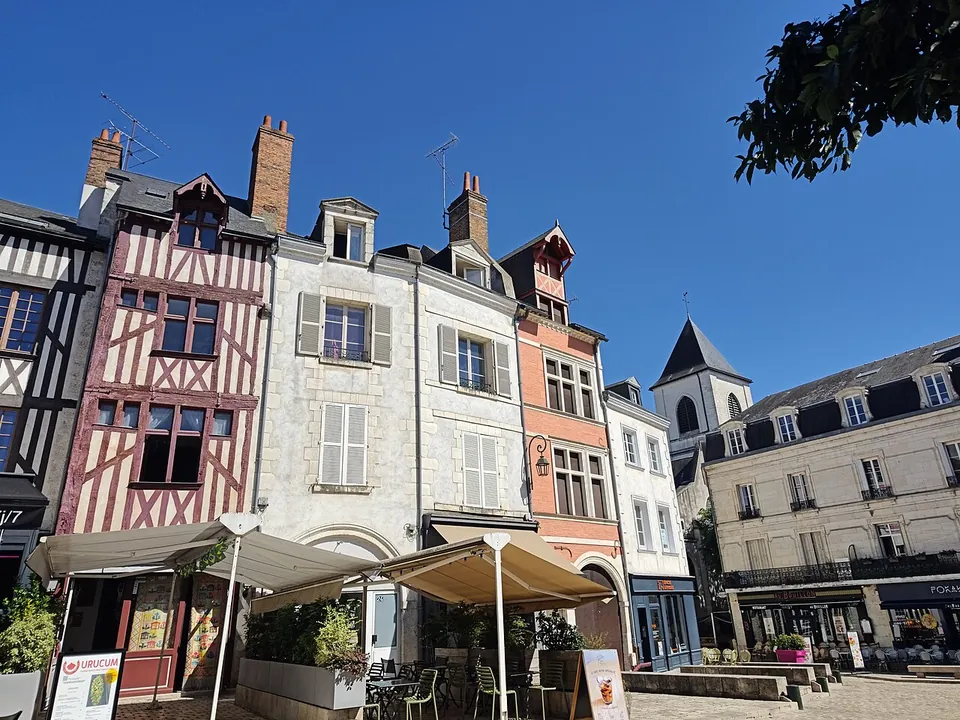
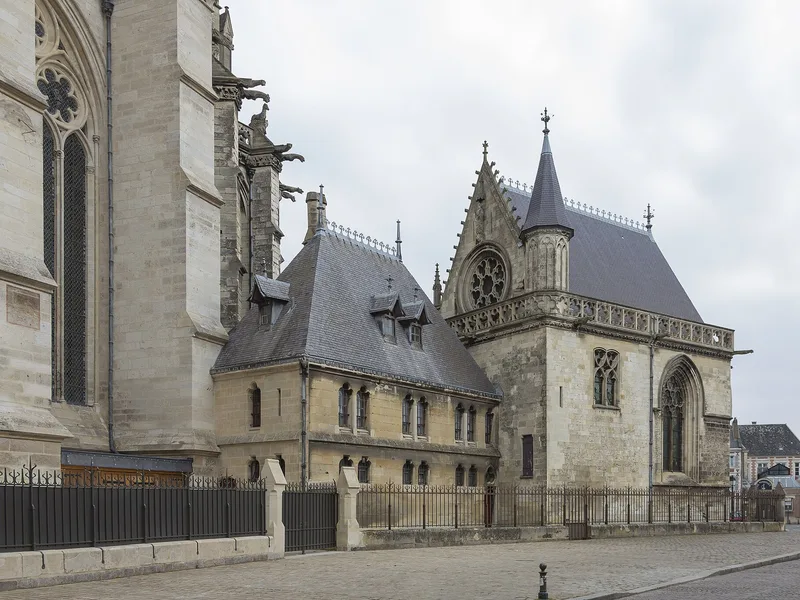
Yes. The remarkable heritage site of Orléans, created in 2008 on the former heritage protection zone, covers the whole centre inside les mails, the station, Dunois and, south of the Loire, the rue Saint-Marceau and the avenue Dauphine. Works that change the outside of buildings there require the approval of the Architecte des Bâtiments de France (the state heritage architect). The City also imposes façade renovation by campaigns, street by street, with a grant of 35% of the cost of the works excluding tax: ask the seller whether the building has received an injunction.
Is Orléans exposed to flooding?
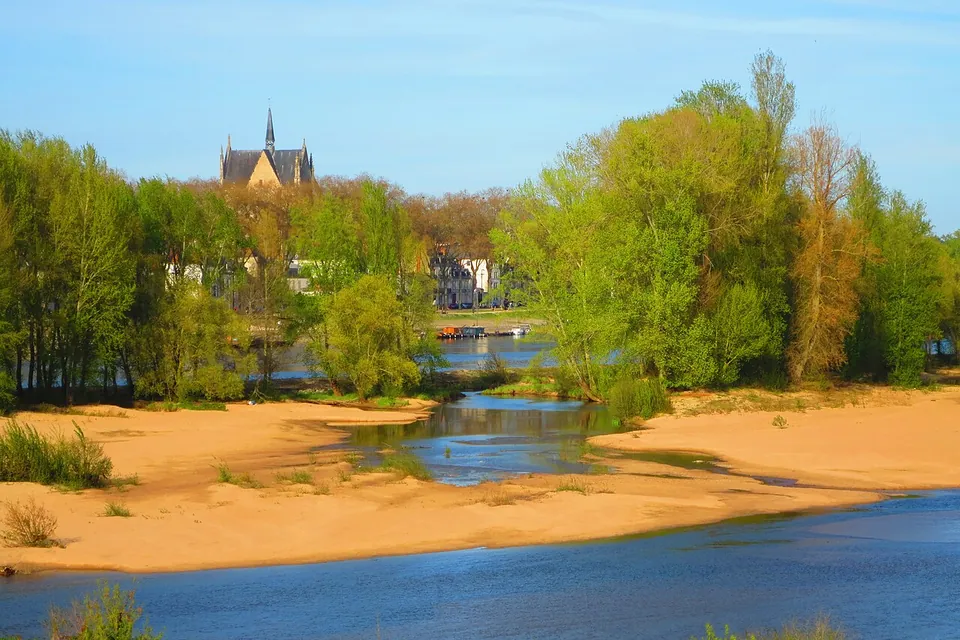
In part, yes. The Val d’Orléans flood risk prevention plan, approved on 20 January 2015, applies to the city, and about 25,000 residents of Orléans live in a flood-risk area according to the City. At the points we tested, Saint-Marceau, Dauphine, the Mouillère and the quays are within its perimeter, but not the centre north of the quays, the station, Dunois or the Argonne. The underground also has many cavities: read the risk statement attached to the preliminary sales agreement.
Can you benefit from the Denormandie scheme in Orléans while living abroad?
No. Orléans is neither in Action cœur de ville nor in a territorial revitalisation operation, which rules out the Denormandie scheme, and this tax reduction is in any case reserved for taxpayers fiscally domiciled in France. For a renovation in the Carmes, look instead at the aid of the OPAH-RU 2025-2030, linked to the rent agreement.
What budget should you plan for investing in Orléans?
According to sales recorded in DVF from January 2025 to December 2025, a studio sold for a median price of €79,000, a two-room apartment for a median price of €116,500 and a large home for a median price of €184,000. Allow about 8% notary fees on top for older properties, and a works budget if the energy rating is poor.
What is the property tax (taxe foncière) in Orléans?
In 2026, the municipal property tax rate is 48.37%, plus 5.71% for the intercommunal body. These rates apply to half the cadastral rental value of the home: ask the seller for their latest property tax notice to know the amount.
How much does a property in Orléans earn after tax when you live abroad?
For a 40 m² furnished two-room apartment bought for €103,080 and let for €592 a month, about 5.9% of the price remains after tax if you are covered by a scheme in the European Union, the EEA, Switzerland or the United Kingdom without depending on a mandatory French scheme, and 5.6% otherwise, under the micro-BIC regime and at the minimum rate of 20%. Charges, property tax and purchase costs are not deducted.
What happens if I sell my property while living abroad?
The capital gain is taxed in France at 19%, plus social contributions, and the notary withholds this tax at the time of sale, with an exemption from tax after 22 years and from social contributions after 30 years of ownership.