Are rents capped in Rennes?
Not in the sense of Paris, Lyon or Grenoble: we found no order setting a reference rent in Rennes in November 2026. However, Rennes is a tight-market zone. On re-letting a home, the rent cannot exceed that of the previous tenant, except in the cases provided for by the decree applicable to leases signed between 1 August 2026 and 31 July 2027. Check the rule before each new lease.
Can I let my Rennes flat on a short-term platform?
Yes, but under conditions. If the home is not your main residence, you need a change-of-use authorisation issued by the Mayor of Rennes, even for a few weeks a year: only one per tax household, none for a company, on a personal basis, for 4 years and not renewable. The building must remain at least 50% residential, the energy rating (DPE) must be between A and E, and a registration number has been mandatory since 1 January 2025. For an investor at a distance, long-term letting remains simpler.
What is the permit to let announced in Rennes?
It is an authorisation the owner would have to obtain before each new letting. The City presented it to the municipal council on 28 September 2026 for the old centre, from April 2027: it would cover about 900 homes of less than 20 m² built before 1975. The City would have one month to reply, and letting without authorisation would expose you to a fine of up to €5,000, or €15,000 for a repeat offence. If you are looking at an old studio in the centre, check the address before buying.
Should you aim for a studio or a T2 in Rennes?
Both find tenants. The studio targets students, who are numerous in Rennes. It rents for more per m², but turns over more often. The 2-room flat also attracts young working people and couples, with longer leases. From abroad, the 2-room flat limits re-lets, and therefore costs and vacancy risk. The choice also depends on your budget and the neighbourhood.
Is an empty home taxed in Rennes?
Yes. Rennes is a tight-market zone. From the 2027 assessments, the tax on vacant residential premises applies to a home that has been empty for at least one year on 1 January. The rate is 17% of the cadastral rental value in the first year, then 34%. A home occupied for more than 90 consecutive days in the previous year is not taxed. Good property management avoids this cost.
How do you manage a property in Rennes from abroad?
Most investors who live abroad use a letting agency. It chooses the tenant, collects the rent, carries out the check-in and check-out inspections and handles minor works. For the purchase, a power of attorney at the notary lets you sign without travelling. Ask your manager to keep track of local rules, in particular the rental permit announced for the old centre and the change-of-use authorisation.
Which Rennes neighbourhoods for a student studio?
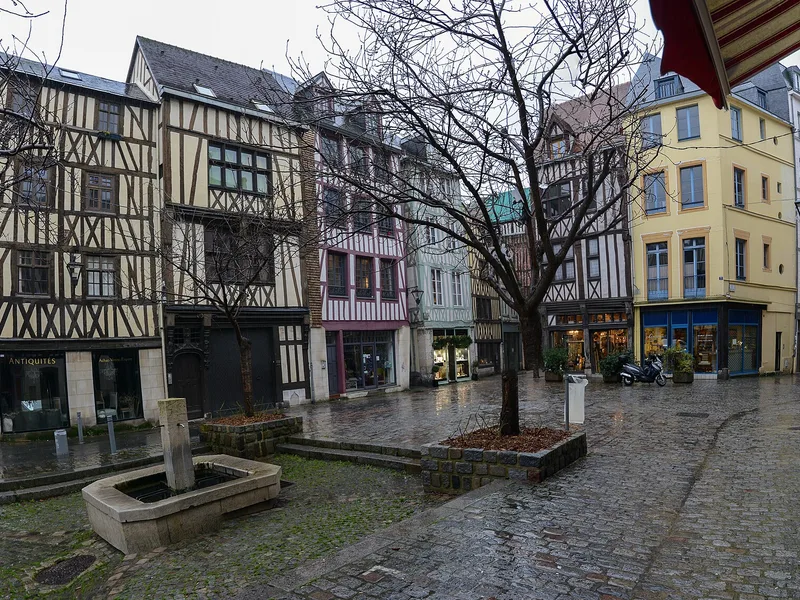
Studios and house shares let mainly near the campuses: Beaulieu, on metro line b, and Villejean, with Rennes 2 University and Pontchaillou hospital, on line a. The old centre also attracts students, but its rents are the highest in the city and the City is announcing a rental permit there for homes of less than 20 m² built before 1975.
What budget should you plan for investing in Rennes?
According to sales recorded in DVF from January 2025 to December 2025, a studio sold for a median price of €105,000, a two-room apartment for a median price of €160,000 and a large home for a median price of €246,225. Allow about 8% notary fees on top for older properties, and a works budget if the energy rating is poor.
What is the property tax (taxe foncière) in Rennes?
In 2026, the municipal property tax rate is 45.66%, plus 1.73% for the intermunicipality. These rates apply to half the cadastral rental value of the home: ask the seller for their latest property tax notice to know the amount.
How much does a property in Rennes earn after tax when you live abroad?
For a 40 m² furnished two-room apartment bought for €148,760 and let for €688 a month, about 4.8% of the price remains after tax if you are covered by a scheme in the European Union, the EEA, Switzerland or the United Kingdom without depending on a mandatory French scheme, and 4.5% otherwise, under the micro-BIC regime and at the minimum rate of 20%. Charges, property tax and purchase costs are not deducted.
What happens if I sell my property while living abroad?
The capital gain is taxed in France at 19%, plus social contributions, and the notary withholds this tax at the time of sale, with an exemption from tax after 22 years and from social contributions after 30 years of ownership.