Is Caen subject to rent control?
No. Caen is not one of the municipalities where rent levels are capped according to Service Public. You set the rent freely at a first letting. The city is, however, in a high-demand zone: between two tenants, if the home has been empty for less than 18 months, the rent increase is limited. For a home rated F or G, the new rent cannot exceed the old one.
Where does the rental permit apply in Caen?
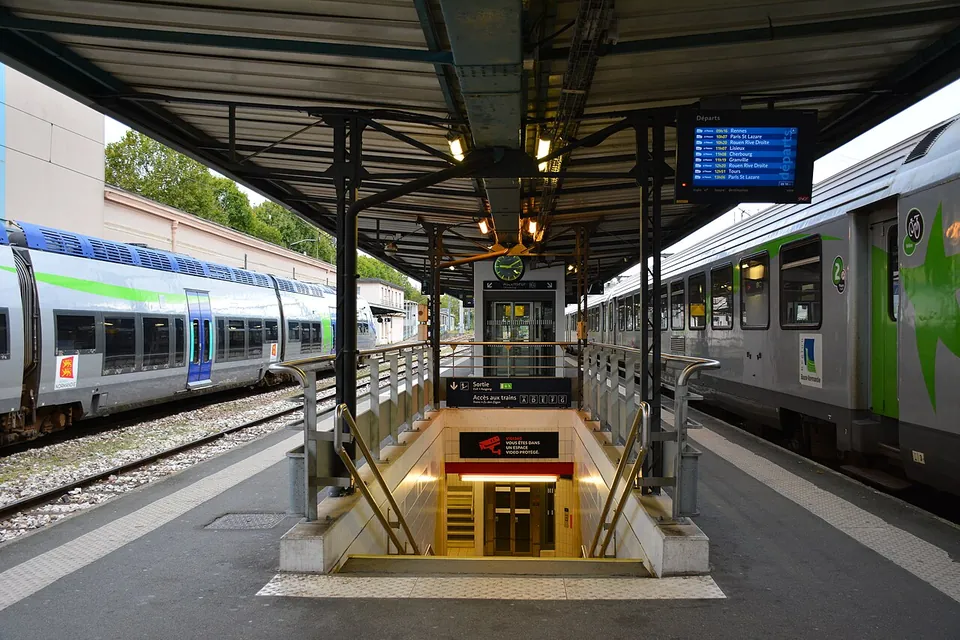
In the station sector, since 1 October 2022. The City notably cites Rue d’Auge, Rue Jules-Oyer, Place de la Gare, Rue Roger-Bastion and part of Rue de Falaise and Rue Canchy, in a list it says is not exhaustive. Before each new lease, you file a free application; the City replies within one month, and the authorisation is valid for two years. Your manager can handle the process for you, as your authorised representative.
What type of property should I let to Caen students?
The furnished studio and 2-room flat close to the campuses remain the most in demand. Demand is supported by the campuses and the university hospital. We do not quote an average studio rent for lack of an official source at municipal level: the rent map gives €16.0 per m² including charges for T1 and T2 units. A renovated, well-insulated property close to a transport line stands out.
Can I let short-term in Caen from abroad?
It is possible: according to Caen la Mer, its municipalities do not currently require a change of use or a local registration number. You must declare the furnished rental at the town hall, then on the national portal announced for the end of 2026, and comply with the co-ownership rules. A main residence can only be let for 120 days a year. Unclassified furnished rentals pay a tourist tax of 5% of the price per night, plus 10% departmental tax.
Will an empty home in Caen be taxed?
Yes. As Caen is a high-demand area, the housing tax on vacant homes already applies there. In 2027, it becomes the tax on vacant residential premises, and Caen is on the list in the decree of 25 August 2026: a home empty for at least a year on 1 January is taxed at 17% of its rental value in the first year, then 34%. A home occupied for more than 90 consecutive days over the period escapes it.
Does the DPE limit letting in Caen?
Yes, as everywhere in mainland France. Since 2025, only homes rated A to F can be offered for rent. From 2028, a class of A to E will be required, then A to D in 2034. Have a DPE carried out before your offer and cost the insulation works, especially in the post-war reconstruction buildings.
Can you benefit from the Denormandie scheme in Caen?
Caen is among the municipalities of Caen la Mer where the scheme applies, for operations completed up to 31 December 2027. This tax reduction remains reserved for taxpayers domiciled in France at the time of purchase: from abroad, you are not entitled to it.
Can you easily get to the United Kingdom from Caen?
Yes, by sea: Brittany Ferries sails from Caen-Ouistreham to Portsmouth in a little under 6 hours by day and about 7 hours at night, and the port welcomed 842,856 passengers in 2025. By train, allow 1 h 54 at best to Paris-Saint-Lazare.
What budget should you plan for investing in Caen?
According to sales recorded in DVF from January 2025 to December 2025, a studio sold for a median price of €85,000, a two-room apartment for a median price of €128,375 and a large home for a median price of €222,000. Allow about 8% notary fees on top for older properties, and a works budget if the energy rating is poor.
What is the property tax (taxe foncière) in Caen?
In 2026, the municipal property tax rate is 51.03%, plus 0.96% for the inter-municipal authority. These rates apply to half the cadastral rental value of the home: ask the seller for their latest property tax notice to know the amount.
How much does a property in Caen earn after tax when you live abroad?
For a 40 m² furnished two-room apartment bought for €113,920 and let for €640 a month, about 5.8% of the price remains after tax if you are covered by a scheme in the European Union, the EEA, Switzerland or the United Kingdom without depending on a mandatory French scheme, and 5.4% otherwise, under the micro-BIC regime and at the minimum rate of 20%. Charges, property tax and purchase costs are not deducted.
What happens if I sell my property while living abroad?
The capital gain is taxed in France at 19%, plus social contributions, and the notary withholds this tax at the time of sale, with an exemption from tax after 22 years and from social contributions after 30 years of ownership.